This article contains affiliate links. If you buy through them I may earn a small commission, at no extra cost to you.
The two words on every tin, and what nobody tells you
Walk down the tea aisle, or scroll any matcha shop, and you’ll see the same two words over and over: ceremonial grade and culinary grade. One costs three times the other. The expensive one implies purity and tradition; the cheap one implies you’re settling.
Here’s the thing almost no Western seller will tell you, and it’s the single most useful fact about buying matcha:
Those grades are not a Japanese system. They don’t officially exist.
The terms “ceremonial” and “culinary” aren’t regulated by any government, any Japanese tea authority, or any international food standard. They were coined by Western importers in the early 2000s, as matcha began entering American health-food shops, to give newcomers a simple way to choose. Useful shorthand — but it means two tins both labelled “ceremonial” can differ enormously, and a brand can slap “ceremonial grade” on almost anything.
So if the label isn’t a guarantee, what is? That’s what this guide is actually about. Once you understand what genuinely separates good matcha from bad — harvest, shade, origin — you’ll never be at the mercy of a marketing word again.
First: what the grades are trying to describe
The ceremonial/culinary split is clumsy, but it’s pointing at something real. There is a genuine biological difference between the matcha you’d whisk with water and drink on its own, and the matcha you’d bake into a cake. It just doesn’t come from a grading committee — it comes from the leaf.
“Ceremonial” is pointing at: first-harvest leaves, shaded for three to four weeks before picking, stone-milled, smooth enough to drink with nothing but hot water. Sweet, umami-rich, low bitterness.
“Culinary” is pointing at: later-harvest leaves (second, third, even fourth flush), which have seen more sun and developed more catechins — meaning more bitterness and less sweetness. That bolder, more astringent flavour is actually a feature in a latte or a brownie, where it needs to cut through milk and sugar.
So the distinction is real. The labels are just an unreliable way of signalling it. Here’s what to look at instead.
The three things that actually determine quality
1. Harvest timing (first flush vs. later)
This is the big one. Matcha from the first harvest of the year (spring, ichibancha) uses the youngest, most tender leaves, which are naturally sweeter and higher in the amino acids that give matcha its umami. Later harvests, through summer and early autumn, give coarser, more bitter leaves.
A producer proud of a first-harvest tea will usually tell you. Silence about harvest is itself information.
2. Shade-growing
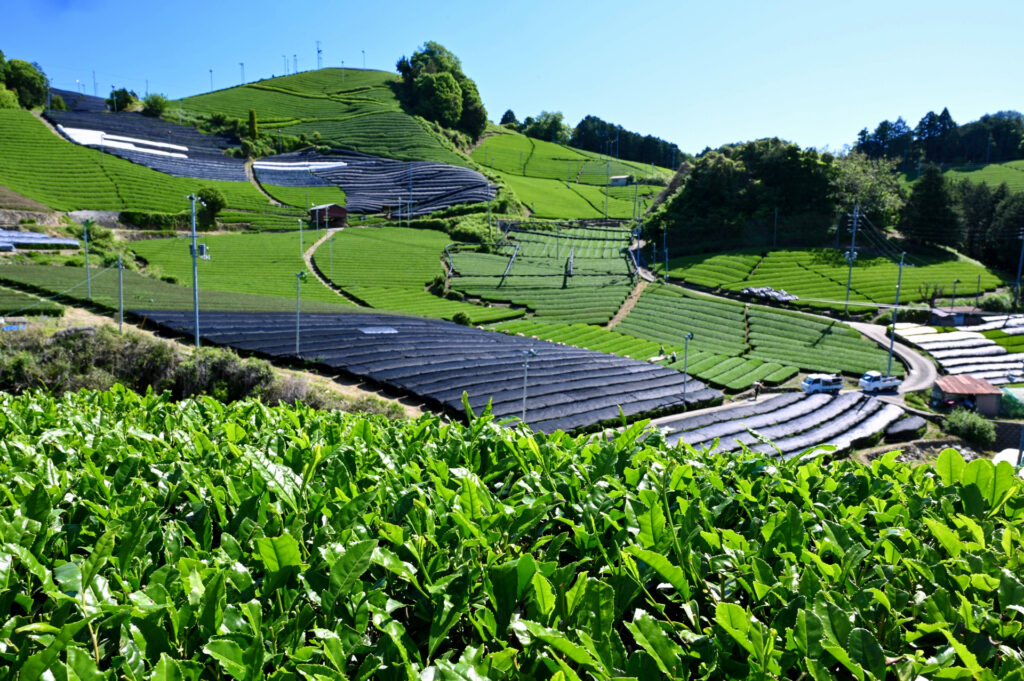
In the few weeks before picking, the best matcha plants are deliberately deprived of sunlight — covered with shade structures (tana or kabuse). Starved of light, the plant floods its leaves with chlorophyll and L-theanine, which is what produces both the vivid jade colour and the sweet, savoury depth.
Three to four weeks of shade is the mark of serious matcha. Less shade, or none, and you get a duller green and a flatter taste. This is also why colour is a rough quality signal: brilliant emerald suggests proper shading; dull, yellowish or army green suggests little or none.
3. Origin — and this is where you should focus
Because the grade labels are unreliable, origin transparency is the best single signal of a trustworthy matcha. A good brand tells you the prefecture, ideally the specific region. A vague “product of Japan” — or worse, “Asian blend” — is a red flag.
The names worth knowing:
- Uji (Kyoto Prefecture) — the birthplace of matcha and the benchmark for ceremonial quality. Balanced aroma, vibrant green, centuries of expertise. Expect a brand-name premium.
- Yame (Fukuoka Prefecture) — famous for gyokuro, increasingly excellent for high-grade matcha. A connoisseur’s pick.
- Nishio (Aichi Prefecture) — the largest matcha-producing region by volume, reportedly around 70% of Japan’s output. Fine particle size, excellent solubility and colour stability, which is why cafés and bakers love it. A lot of what enters global supply chains as “ceremonial” actually comes from here — reliable, but the very highest drinking grades are rarer here than in Uji or Yame.
- Kagoshima (southern Kyushu) — warm climate, large scale, milder and less complex profile. Good value, strong for lattes.
When a tin names one of these and tells you the harvest, you can trust it far more than one that only says “ceremonial grade.”
So which should you buy?
Forget the label. Answer one question: what are you going to do with it?
Drinking it straight (whisked with water)
You want first-harvest, well-shaded, single-origin matcha — the thing “ceremonial” is gesturing at. Uji or Yame if you want the benchmark; a good Nishio if you want quality at a gentler price. This is where spending more genuinely pays off, because there’s nothing to hide behind. Buy the freshest small tin you can (30–40g), ideally with a harvest date.
Lattes
You do not need the most expensive ceremonial tin — its delicate qualities get lost in milk anyway. A strong “latte grade” or good second-harvest matcha holds its flavour and colour against dairy or oat milk better, and costs less. Nishio and Kagoshima shine here.
Baking and cooking
Culinary grade is genuinely the right choice — you want that bolder, more bitter profile to survive heat, sugar and butter, and you want colour that doesn’t fade in the oven. Paying ceremonial prices to bake a cake is money set on fire.

How to spot good matcha in 60 seconds
Five quick checks, no expertise required:
- Colour — vivid, almost electric emerald green. Dull, yellowish or olive means poor shading or old leaf.
- Origin on the label — a named prefecture (Uji, Nishio, Yame, Kagoshima). No origin, no trust.
- Packaging — opaque, airtight, ideally a tin with an inner seal. Matcha degrades fast in light and air; a clear glass jar on a bright shelf is a bad sign.
- Texture — fine as baby powder, not gritty. Good matcha is stone-milled slowly (a granite mill produces only 30–40g an hour), which protects the texture.
- Price sanity — genuine drinking-grade matcha has a hard cost floor because of shade-growing and first-harvest scarcity. “Ceremonial grade” at under about $20 per 30g is usually one of those words doing more work than the tea.
One thing about preparation (so you don’t waste good matcha)
If you buy a good drinking-grade tin and then make it badly, that’s a shame. The single most common mistake: water that’s too hot. Boiling water scorches matcha, destroys the L-theanine, and turns it harsh and bitter.
Aim for water around 75–80°C (165–175°F) — hot, not boiling. Sift 1–2 teaspoons (about 2g) into a bowl, add the water, and whisk briskly with a bamboo whisk (chasen) in a “W” or “M” motion until you get a fine, even foam.
That’s the short version. A full guide to tools and technique is coming separately — how to make matcha at home without the ceremony.
The bottom line
“Ceremonial” and “culinary” aren’t lies, but they aren’t the truth either — they’re a Western shorthand for a real difference the labels themselves don’t guarantee. The real signals are harvest, shade and origin, and any brand worth your money will tell you all three.
If you want a simple rule: buy by origin and harvest, match the grade to your use, and treat any tin that won’t name its prefecture with suspicion.
Next, if you want specific shops — who names their origin, who ships well internationally, and who’s worth the money — that’s the companion guide: where to buy real Japanese matcha online.
Related reading: Where to buy real Japanese matcha online · How to make matcha at home without the ceremony · What Japanese pottery names actually mean — because a good chawan matters more than people think.
Comments